This article was written largely from an exchange with Olivier Duret, founder of Va’eva’e.
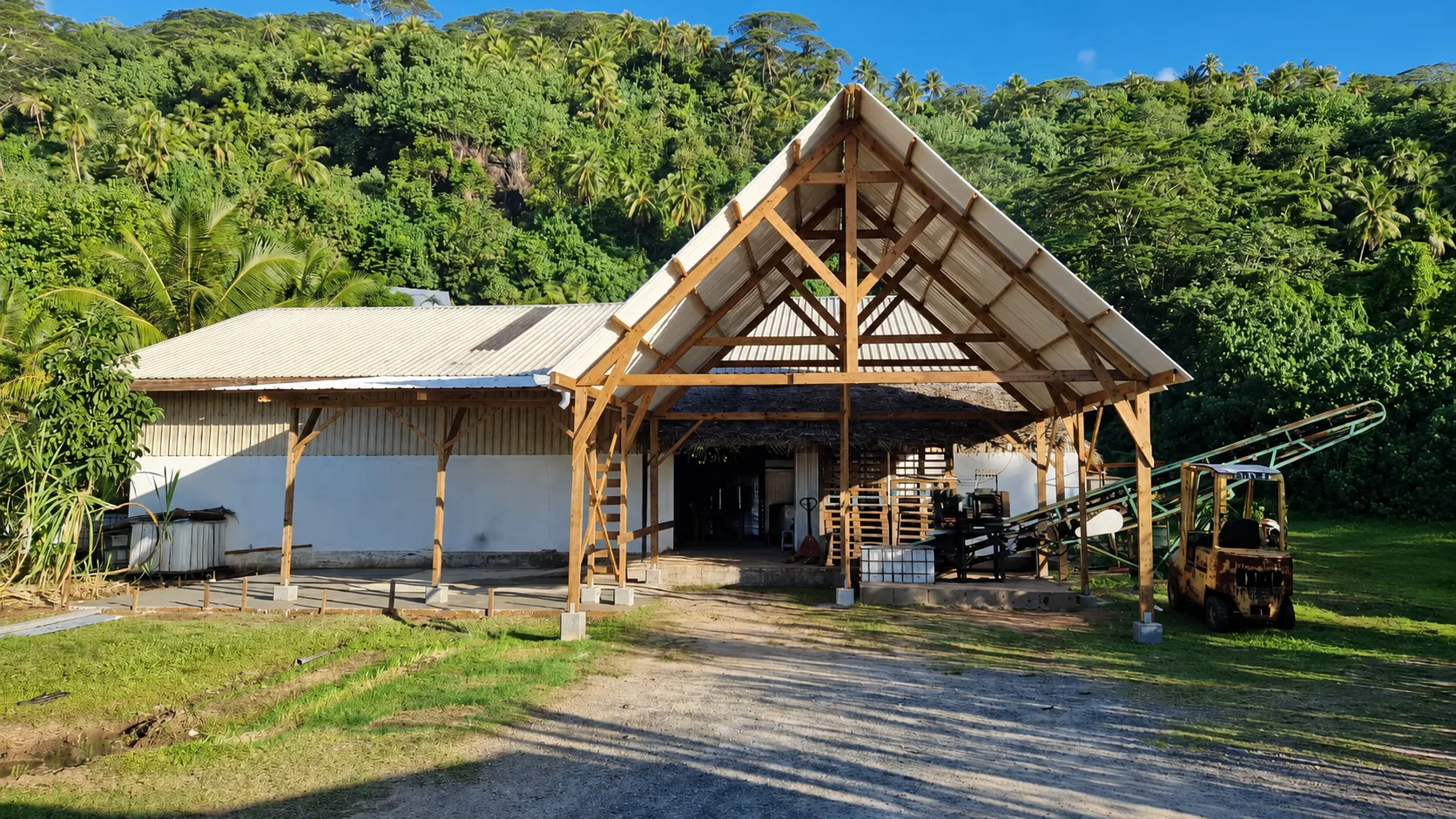
Forget limestone walls and Provence trees. Picture instead a tin roof under the Pacific sun, palm trees, and an alembic running a few kilometers from Bora Bora, on the small island of Taha’a. That’s where, in the Îles Sous-le-Vent, Va’eva’e is tucked away. And the bottle coming out of that shed has just beaten every pastis in France.
In the first Behind the Bottle, we met Pernod, the absinthe survivor. In the second, Ricard, the yellow king of Marseille. Today the series takes an unexpected turn: about 16,000 km from Provence, to French Polynesia.
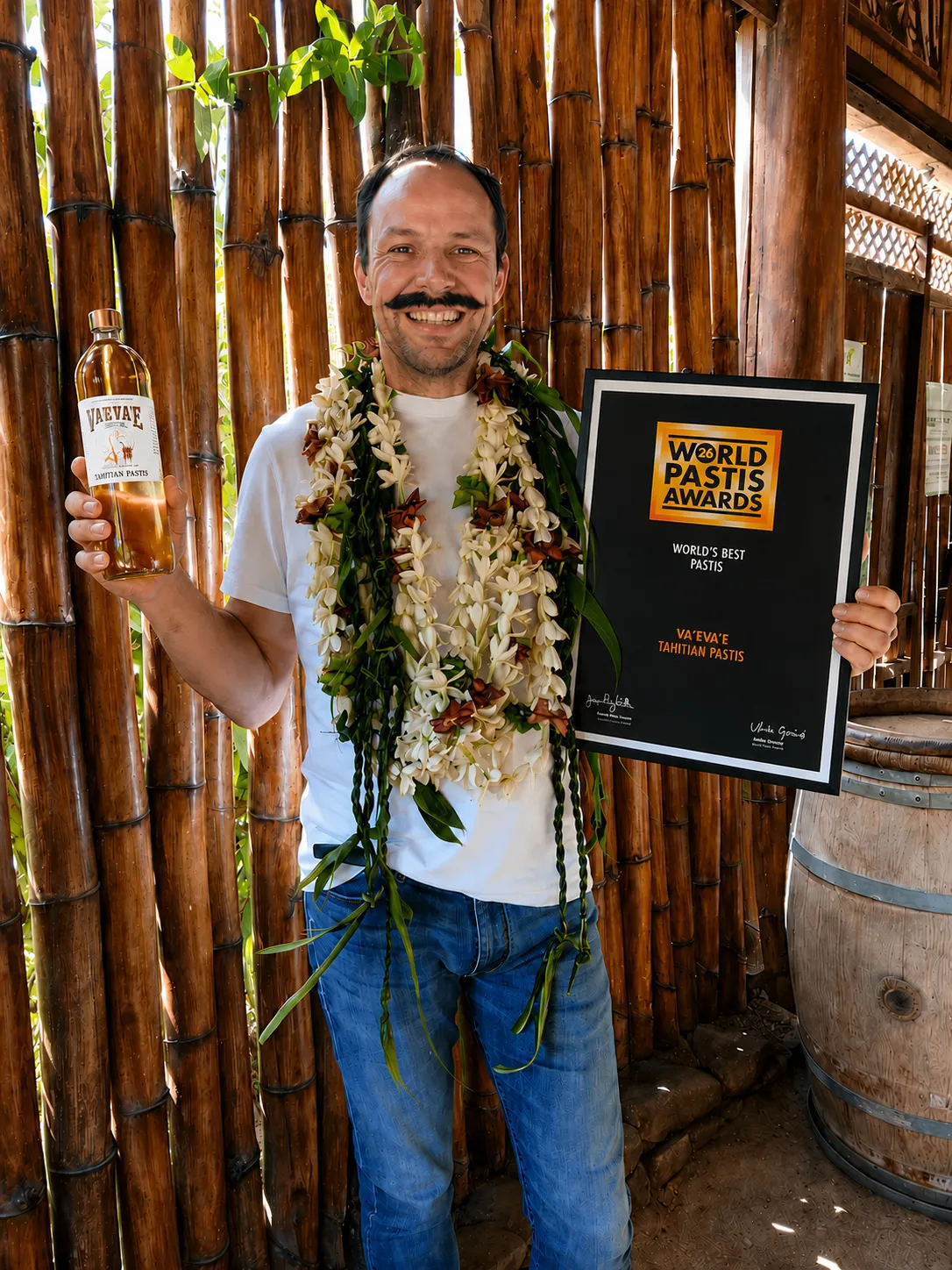
This pastis is called Pastis Tahitien, and it is the first distillery in the world to make a pastis on a base of organic agricole rum drawn from its own sugar cane. In 2026, the World Drinks Awards gave it the prize nobody saw coming: World’s Best Pastis.
Let’s dive into the bottle that now casts a shadow over the giants of Marseille.
The Moonshiner of Taha’a
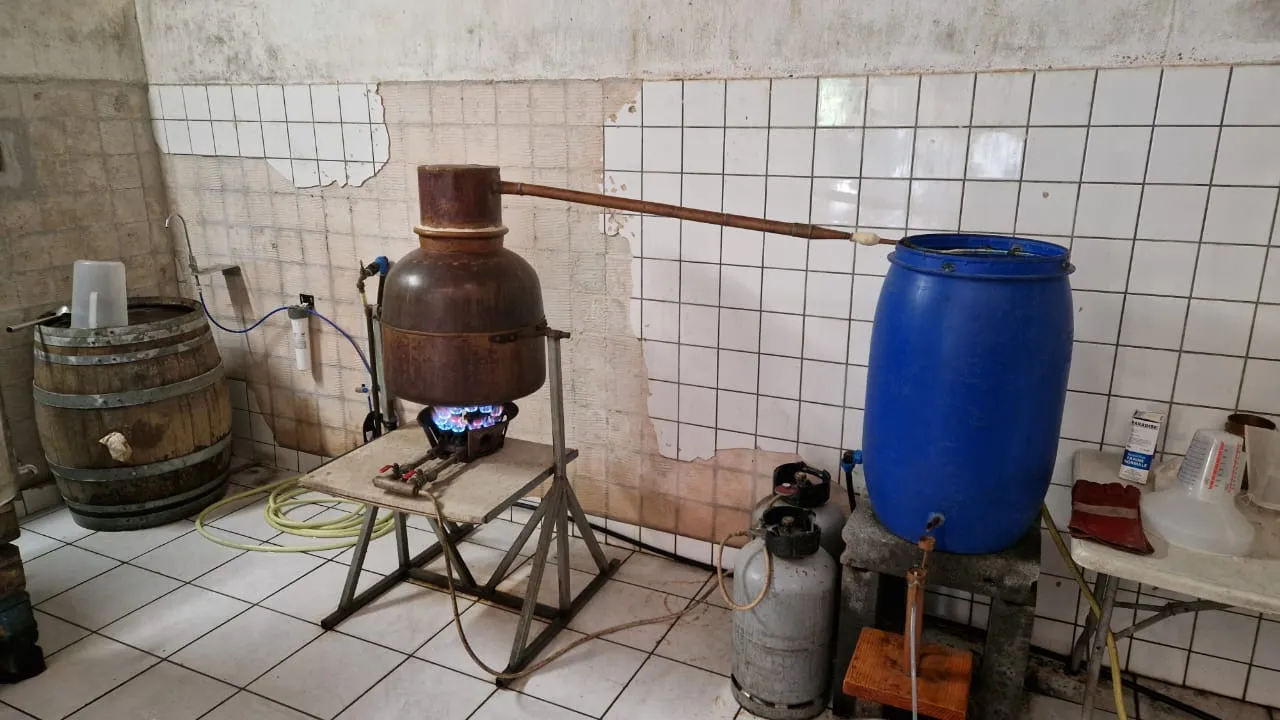
If someone had told you a pastis would be born under a 60-litre Savoyard still set down on a Polynesian island, you probably wouldn’t have believed it. Olivier Duret, the founder of Va’eva’e, decided otherwise.
But let’s rewind a little. Before the pastis, there was rum. Olivier started helping to create what is considered the world’s first organic agricole rum, under the brand Manao, within a Tahitian group that also distributes Pernod-Ricard. Suffice to say he also knew the anise universe very well, and knew exactly what aromatic profile a pastis of exception should offer.
The rum itself was born from a frustration. In French Polynesia, imported spirits are taxed at roughly 300%. To give you an idea, major houses like Pernod-Ricard land on Polynesian shelves at around 60 € a bottle. Apéritif can thus quickly become a luxury. Olivier puts it bluntly: “At the time, we created a rum because we were not satisfied with the local entry-level offer, while imported products were far too expensive.” Since then, other distilleries have launched in Polynesia, and there are now some very good rums. But for the rest, it’s still the same: “Outside of rum, almost every spirit — gin, pastis and many other categories — is still imported, or produced locally but at a quality level that didn’t really match what we, as lovers of good products, were after.”
That gap is exactly why Va’eva’e was born. The name says it all: “clair de lune” in Tahitian, “Moonshine” in English. A deliberate nod to the American bootlegging spirit, where you distilled for your mates. As Olivier sums it up: “Making spirits according to the desires of your friends or your clients is the historical role of the American Prohibition moonshiner!”
Then the desire to make pastis imposed itself, through a friendly detour. The team works closely with the brothers of the Matavai brewery, in Tahiti: two Marseillais who have lived in Polynesia for a good twenty years, with whom they had already launched a fully artisanal gin in that same logic of local, sincere and accessible products. The day the Matavai brothers opened a bar right next to the brewery, having “their” pastis on the counter became an obvious move.
The 14 July Tasting
Naive question: how many test distillations to find your own pastis recipe? At Va’eva’e, they didn’t mess around: more than eighty.
The project to make good local spirits goes back to 2011–2012, but the first bottles of Pastis Tahitien only went on sale in 2023. In between, years of varying the local plants, the aromatic depth, the cane varieties for the base, the balances. At one point, the team found itself with four samples, all interesting, with fairly different profiles. How to choose?
The story deserves to be told. On 14 July 2023, Bastille Day, friends gathered around a coq au vin. At apéritif time, the four pastis were poured for them, blind. They aren’t judges or experts: they are friends. And they are the ones who decide.
Their verdict came in: it’s recipe number 2 that wins that evening, the one still produced today, and the one the World Drinks Awards would end up crowning, less than three years later. Olivier keeps a near-confessional distance from the title: “I remain very humble about this kind of title — everyone knows an excellent pastis, and the jury confirmed to me that the choice between the finalists had been very difficult.” He also uses this opportunity to salute the other participants, having tasted some of their products and finding them “very good as well”. At Pastis Project, we agree!
Inside the Bottle: Distilled on Cane, Perfumed with Anise
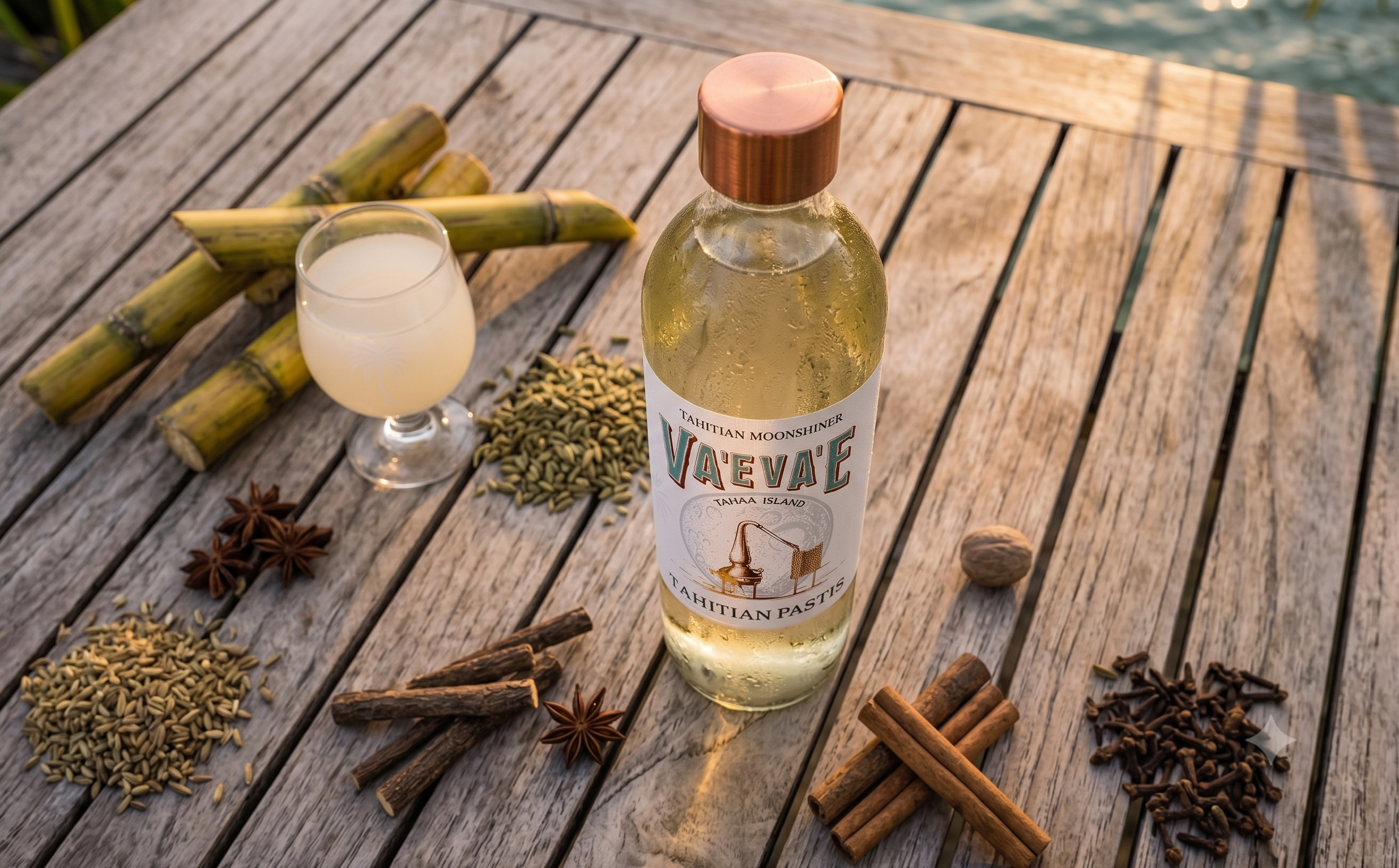
The team loves artisanal pastis, original variations, highly botanical products. But for Va’eva’e, a “Tahitian pastis” “had to first remain a pastis”. The bottle had to please the friends above all. In Polynesia, there are no local anise-bearing plants: “we are working on it, because some plants could perhaps bring something in the future,” Olivier notes. For this first recipe, Va’eva’e stayed on the classic base of the triple anis: badiane (star anise), fenouil (fennel) and anis vert (green anise). Everything is certified organic, sourced from a French herbalist. There is also licorice root, which anchors the product in the pastis universe. “It’s a generous pastis,” Olivier adds.
The local touch, beyond the spirit base, is cinnamon: a few canneliers grow in Polynesia, the crop is developing, and Va’eva’e are also trying to plant some themselves.
But the real personality of the bottle is its base, and that’s where the story takes a Polynesian turn.
The Winning Recipe of Pastis Tahitien:
- The cane sugar base (45°): There is no locally produced neutral alcohol in Polynesia. Importing it? “It would be heavily taxed, and it wouldn’t make much sense for us,” Olivier explains. Va’eva’e therefore uses what they know how to do best as a base: an organic agricole rum distilled from the distillery’s own sugar cane.
- The anethole core: The triple anis (badiane, fenouil, anis vert) is at the heart of the recipe.
- Licorice & the local touch: Licorice root anchors the pastis identity; the local note is cinnamon from Polynesian canneliers.
- The alembics: The Pastis Tahitien is a pastis entirely distilled: “Macerations, arrangements, simple blends are not really our universe. What we love is distilling.” Current production runs on “Jacky”, a 60-litre Savoyard alembic.
French Polynesia being a pays et territoire d’outre-mer (PTOM), its pastis is not subject to European regulations. However, Olivier points out that they are already prepared to meet the standards for a possible launch in metropolitan France: “Our pastis is absolutely in the spirit of, and very likely meets the criteria of, European regulation, but we have not yet had certain markers such as anethole precisely analyzed. There is no laboratory in Polynesia for this kind of analysis.”
The Pastis Tahitien is today sold exclusively in Polynesia, in two formats: a 35 cl bottle, very handy for slipping into a suitcase, and a large 75 cl bottle, since Polynesia is not bound by the European 70 cl standard. The 75 cl retails around 50 €, which makes it cheaper locally than imported major brands. For the Polynesian clientele, it’s a double benefit: a local pastis, of very good quality, and more accessible than the imported brands.
What to Expect When You Pour a Glass
This pastis was imagined for Polynesia, where it is hot year-round: “We truly imagined it for a pétanque game that lasts all afternoon, for something fresh, light, agreeable, that does not saturate the palate,” Olivier sums up. It is most often served very dilute, as much to cool down as to drink something highly aromatic.
That said, Olivier insists that every Va’eva’e spirit should also be “tasted neat”, and the Pastis Tahitien is no exception: pour a small measure, and it behaves almost like a little tasting liqueur or a digestif.
Bottle Profile
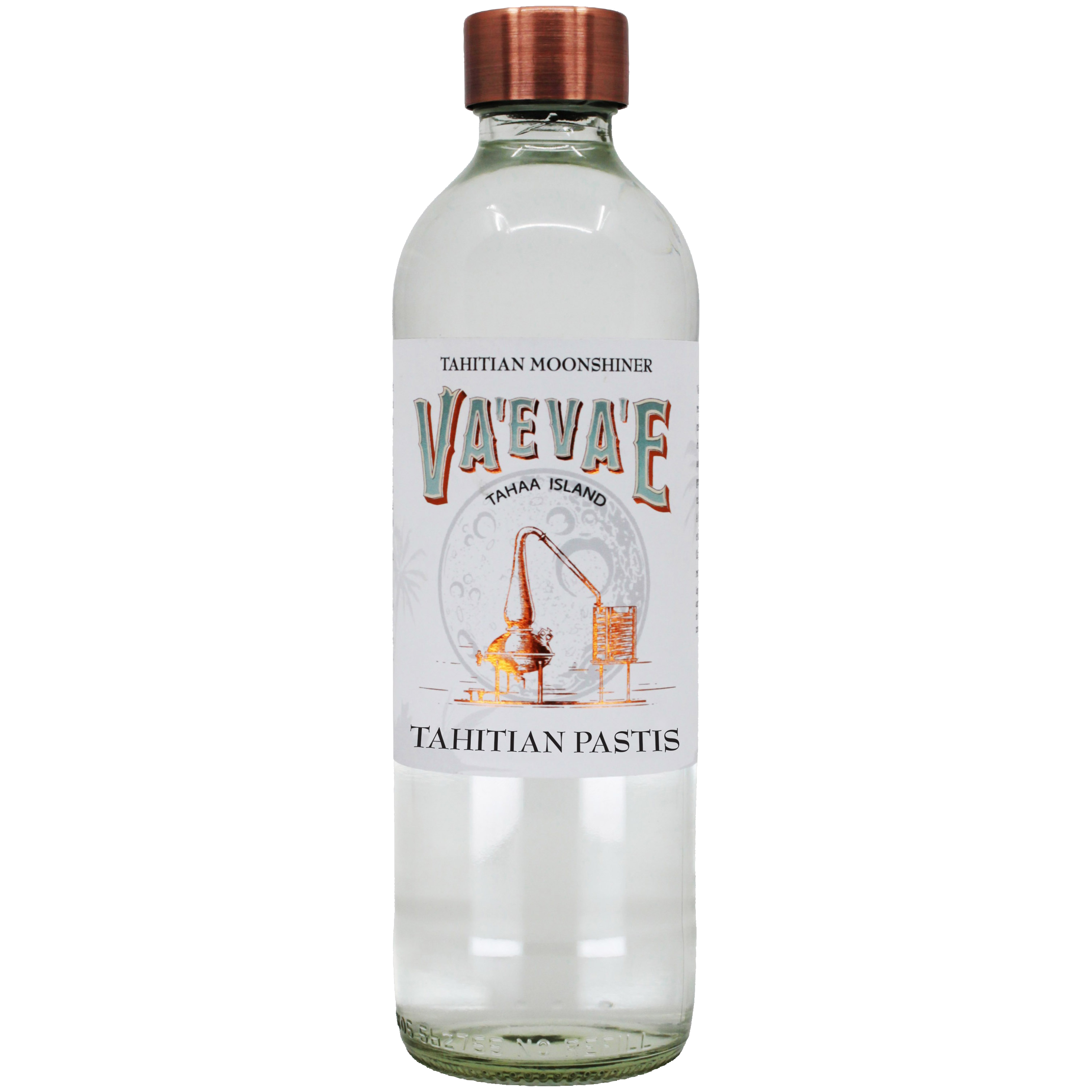
Characteristics
45%
35cl / 75cl
Pastis
French Polynesia
~67€ / L
Where to find it?
For now, getting a bottle of Pastis Tahitien outside of French Polynesia is tricky. Va’eva’e produces only about 1,500 bottles of pastis a year (out of about 10,000 across all spirits, gin and rum included), and it is sold almost exclusively on the islands. Olivier’s goal is to soon launch a crowdfunding campaign, which would also let pastis-lovers in metropolitan France get bottles through pre-orders. There is surprisingly a real American clientele: “A significant part of our clientele is American, so not necessarily familiar with this category. Yet we see that the product pleases them a lot, and some American tourists leave with pastis in their luggage. For us, it’s a small extra pride.”
- Distillerie Va’eva’e, Taha’a (Îles Sous-le-Vent, just across from Bora Bora), direct at the distillery
- Bar Matavai, Tahiti
- The main cavistes of French Polynesia
- News and the upcoming crowdfunding: Va’eva’e Tahitian Moonshiner on Facebook
The Pastis Without a Passport
Pastis Tahitien is the kind of bottle that makes borders absurd. It was born because a very French apéritif had become a luxury on a tropical island, and because a small team of moonshiners at Va’eva’e decided to fix that with their own sugar cane, their own stills, and a triple anis recipe designed for the heat. It was never meant to become World’s Best Pastis, and yet, in 2026, it did. For Olivier, “it’s a real pride to be able to say that, this year, the world’s best pastis is Polynesian. There’s a rather delicious irony in that idea, and at the same time it shows how far pastis has traveled.”
Two caveats before the hunt: it is micro-batch, it is essentially in Polynesia, and it will likely reach Europe through crowdfunding first. But if you’re looking for proof that pastis has become a global category, and not just a Provençal one, this bottle is it.
References
- https://vaevae.pf
- https://www.facebook.com/profile.php?id=61553150950348
- https://pastis.worlddrinksawards.com/winner-Pastis/worlds-best-pastis-world-pastis-awards-2026
- Pastis Tahitien, World’s Best Pastis 2026, our coverage
Curious to learn more about the brand? Check out the Va’eva’e page for more details.
For more stories and daily news from the world of Pastis, join us on our Instagram!