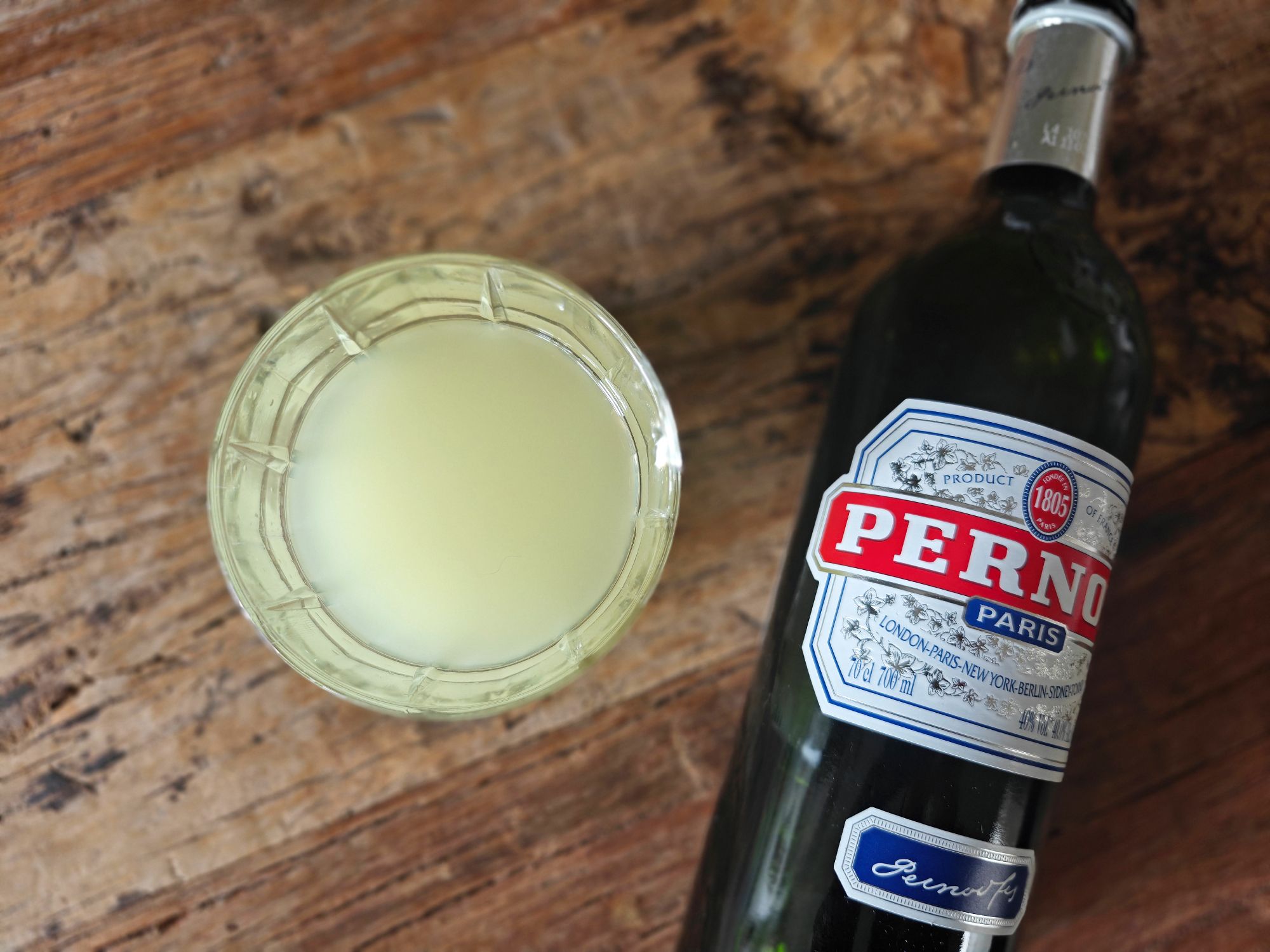
If you’ve ever sat at a French café, you’ve likely seen its iconic name on the menu, right next to Ricard and Pastis 51. Pernod is a titan in the world of anise spirits, a name that echoes through more than two centuries of history. But here’s a little secret that trips up even seasoned drinkers: the classic green-tinged Pernod you find today isn’t technically a Pastis.
So what is it, then?
Pernod is the direct descendant of the spirit that started it all, Absinthe. Its story is the story of reinvention, a tale of how France’s most famous distillery, faced with a nationwide ban, created a new tradition that would define French apéritifs for the next century.
Pernod will be the only non-Pastis spirit featured on this site, and for good reason. It’s not just another anise-flavored drink; it’s the ancestor from which all modern Pastis descend. Let’s dive into it!
A legacy forged in Pontarlier and Avignon
To understand Pernod, we have to go back to a time before pastis: to the era of Absinthe, the Fée Verte, or “Green Fairy”. The story begins in 1797, when Major Dubied purchased an absinthe recipe from the Henriod sisters of Couvet, Switzerland. Together with his son-in-law Henri-Louis Pernod, they founded the first absinthe distillery, Dubied Père & Fils, in 1798. In 1805, Pernod leaves his father-in-law and established his own distillery Pernod Fils in Pontarlier, which became France’s first absinthe producer.
This is when it gets complicated. In 1860, in Avignon, Jules-François Pernod, not related to Henri-Louis Pernod of Pernod Fils mentioned above, founded the company Jules Pernod, initially focused on extracting madder root for red dye. Renamed Pernod Père et Fils in 1872, the company shifted to absinthe production in 1884 at its Montfavet distillery near Avignon.
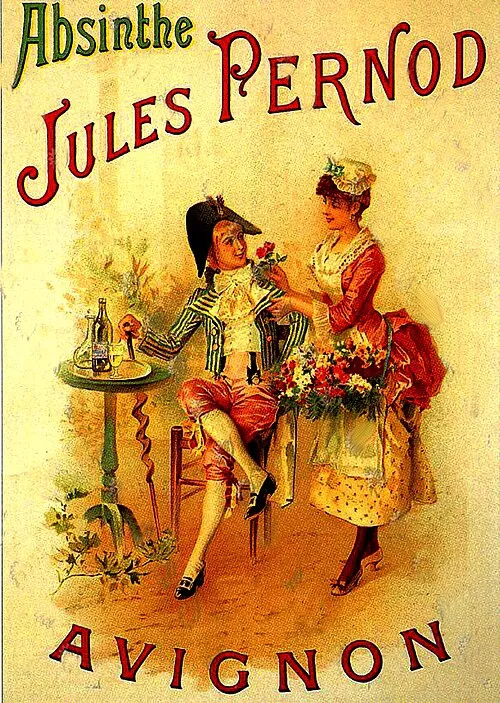
Absinthe exploded in popularity throughout the 19th century, becoming the drink of choice for artists, and poets in Paris, from Van Gogh to Oscar Wilde. By 1870, the traditional French ritual of the apéritif was ruled by absinthe, which made up nearly 90% of all drinks served before dinner. Between 1874 and 1910, absinthe production in France skyrocketed from 700,000 liters to 36 million liters!
The day the Green Fairy died
By the early 20th century, a powerful temperance movement, coupled with lobbying from the wine industry, had painted absinthe as a social menace. They blamed its high alcohol content and the (largely misunderstood) effects of wormwood for driving people to madness and ruin.
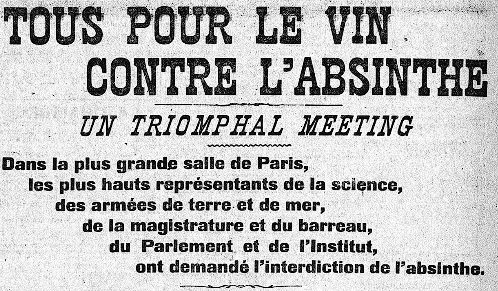
The campaign was a success. In 1915, after years of protests and highly publicized murder cases allegedly linked to absinthe, France banned its production and sale. The ban actually lasted until quite recently: 2011!
This left a massive void in the market and a nation thirsty for its favorite anise-flavored drink. Distilleries had to adapt or disappear. For Pernod Père et Fils, a company whose entire identity was built on absinthe, this was an existential crisis. They chose to adapt and follow the rules.
The result was launched in 1920: the first commercially successful anise-based spirit of the post-absinthe era. In order to comply with the rules, this new drink did not include wormwood, which was supposedly the reason why people would go mad. It was simply called “Anis Pernod”, and is by many considered the “First Pastis”.
After years of disputes and lawsuits over the “Anis Pernod” brand, Pernod Fils of Pontarlier and Pernod Père et Fils of Avignon merged in 1928 to form Établissements Pernod. It was then acquired by Ricard in 1975, to become Pernod-Ricard.
Inside the Bottle: How Pernod is made and what it tastes like
Now that we’ve covered Pernod’s history, let’s turn to the bottle itself. According to Pernod-Ricard, today’s Pernod is a direct descendant of the recipe released in 1920. While Pastis and Pernod share a family resemblance, they are crafted in fundamentally different ways:
The Pernod Process: Distillation, Not Maceration
- Star Anise Distillation: The primary flavor comes from star anise, mainly sourced from Vietnam and southern China. It is distilled to extract a pure, potent essence of anethole.
- Herbal Distillates: 14 aromatic plants and herbs are distilled separately to create distinct essences. Fennel plays a starring role, alongside mint and coriander.
- Blending: These distillates are then carefully blended together.
Crucially, one ingredient is missing: licorice root. According to EU Regulation 2019/787, a spirit must contain natural extracts of licorice root to be legally labeled “Pastis.” Because the classic Pernod recipe does not include licorice, it is designated an Anisé spirit, not a Pastis.
What to expect when your pour a glass
So, what should you expect when you drink a Pernod?
With its blend of herbs and spices, Pernod delivers a sweet, aromatic anise flavor. The sweetness is balanced by bright herbal hints of mint, fennel, and other secret botanicals that give it a lively character. Unlike Ricard or Pastis 51, it has a gentle warmth with a lingering herbal finish that keeps each sip refreshing. Let me repeat myself though: this is not a Pastis. I want to set your expectations straight if you decide to try it.
Of course, it still produces that cloudy louche effect when you add cold water. The serving ritual is exactly the same: one part Pernod, three to five parts cold water, and ice cubes if you prefer.
Bottle Profile
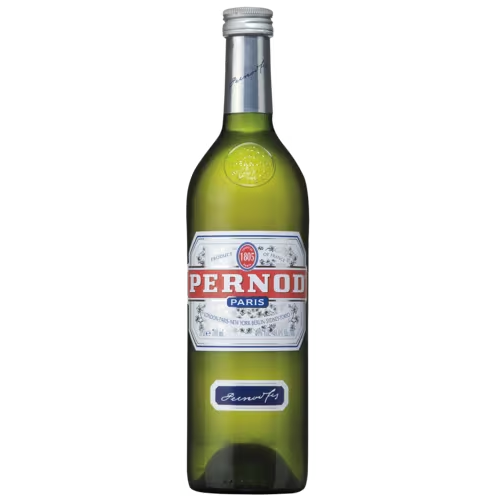
Characteristics
Where to find it?
Pernod-Ricard is now a huge multinational, and they sell their products globally. When I was still studying in China in 2015, I was able to buy some quite easily at local supermarkets, so that should tell you something. Here are a few example where you can find it around the world:
A living piece of French History
Pernod is more than just a brand; it’s a living piece of French history. It’s the spirit that survived a prohibition, defined a new category of drink, and paved the way for the pastis we all know and love. While it may not wear the “Pastis” label, I had to include it within Pastis Project.
Next in line, Ricard!
References
Curious to learn more about the brand? Check out the Pernod-Ricard page for more details.
For more stories and daily news from the world of Pastis, join us on our Instagram!