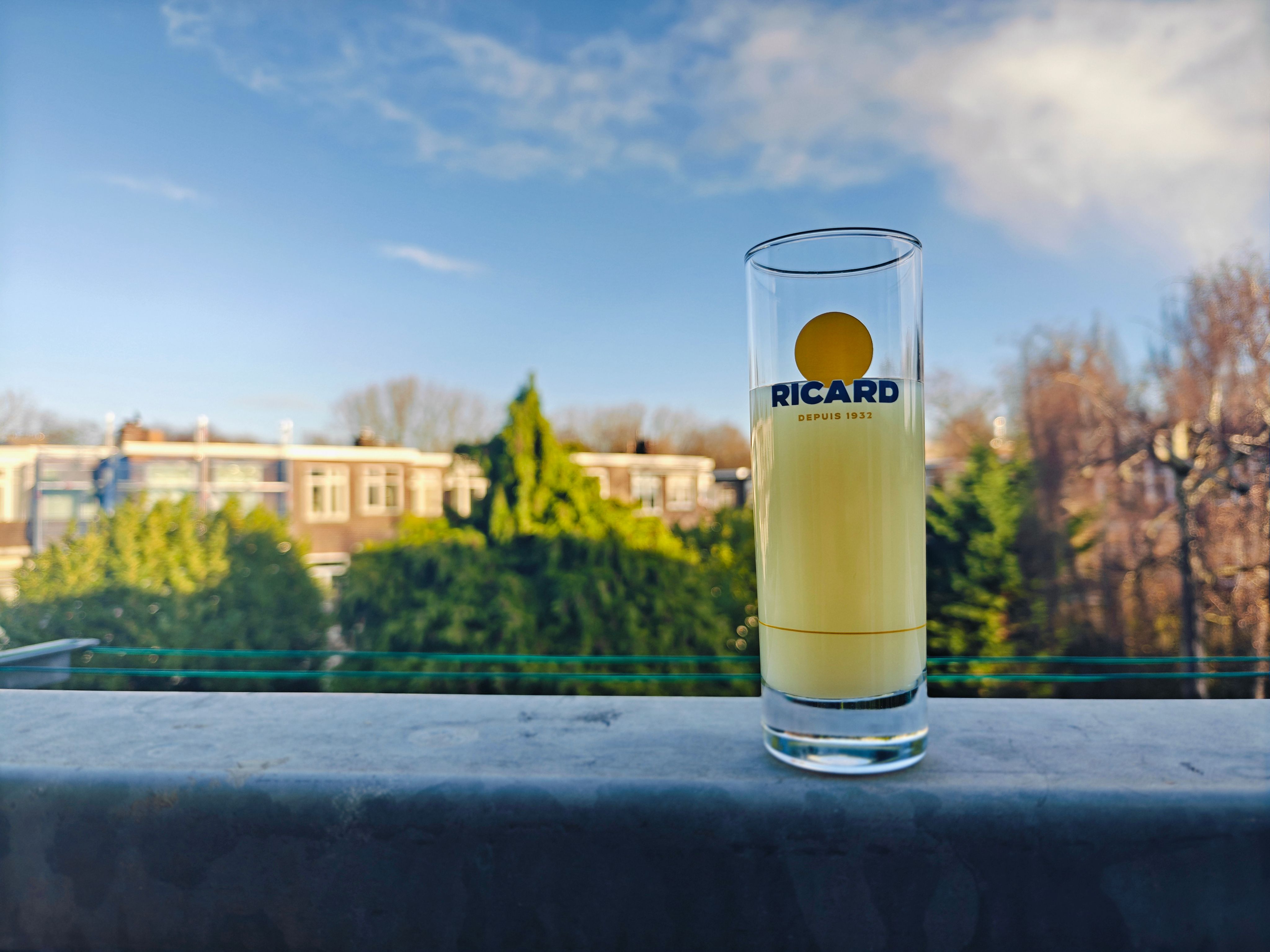
If Pernod is the father of anise spirits, Ricard is the undisputed King. Walk into any bar in France, from the rainy streets of Brest to the sunny terraces of Marseille, and ask for a “Pastis”. Nine times out of ten, the bartender will reach for that iconic rectangular bottle.
While we learned in the previous episode that Pernod is technically an anisé, Ricard is the real deal. It is the archetype, the standard-bearer, and the very definition of Pastis de Marseille. In 2020, 38 million liters of Ricard were sold globally!
But how did a young artist from Marseille manage to turn a homemade recipe into the best-selling anise spirit in the world, overtaking the giants of the absinthe era?
Let’s dive into the yellow legend!
Paul Ricard and the birth of “Le vrai Pastis”
To understand this bottle, you have to understand the man whose name is on the label: Paul Ricard.
Following the ban on Absinthe in 1915 and the subsequent ban on all anise-based spirits, the French government slowly began to loosen the reins. By 1920, anise drinks were allowed again, but they were heavily regulated: no licorice, low alcohol, and strict sugar limits. This was the era of the “Anis” we saw with Pernod (check our first Behind the Bottle to know more!).
Paul Ricard was born into a family of wine merchants, but his heart was originally set on a different path: he wanted to be a painter. He dreamed of entering the Beaux-Arts de Marseille, but his father refused, insisting he join the family trade. Denied his canvas, Paul decided to express his art through flavor instead.
His obsession began early. At just 12 years old (!!), he met Monsieur Espanet, a former hairdresser turned distiller, who entrusted him with a secret recipe for a 60° anise spirit. By the time he was 17, Paul had left school and set up a laboratory in his home, using a small alambic.
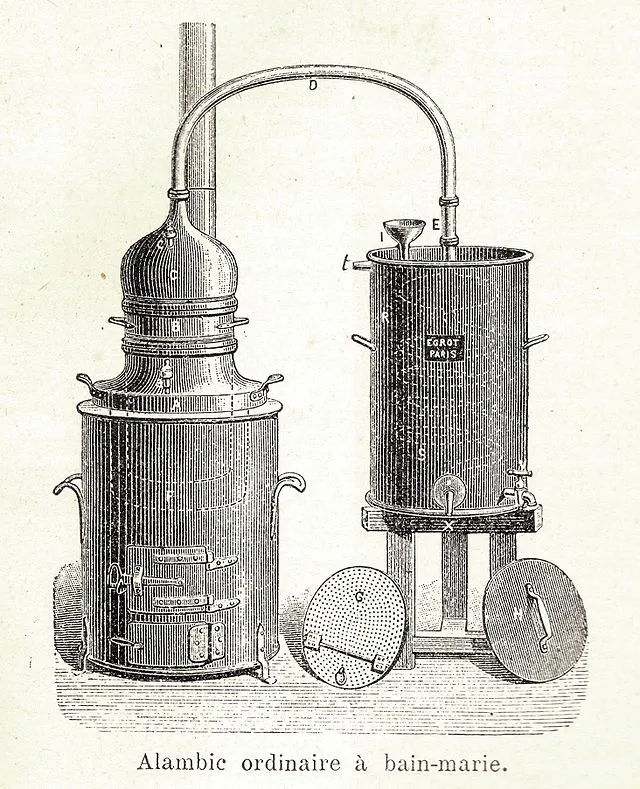
While the big Paris distilleries were following the strict government rules, Paul was in his lab, experimenting like a mad scientist. He spent his days refining his blend, balancing star anise and green anise with a touch of licorice and Provençal herbs. But the real test wasn’t in the lab. Paul took his “illegal” experiments directly to the cafés of his neighborhood, Sainte-Marthe, using the locals as his personal focus group while playing a constant game of cat-and-mouse with the police.
The Audacity of 1932
When the decree allowing 40° anise spirits finally passed in April 1932, Paul was ready. But the competition in Marseille was fierce. To stand out, he did something no one else had dared to do: he put his name and the word “Pastis” directly on the label, with what would be a very catchy headline: “Ricard, le vrai pastis de Marseille”, which means “Ricard, the true Pastis of Marseille”.
He spent his days touring the bistros and cafés of the city, personally drinking with customers to build a loyal following. He knew exactly how to talk to bar owners, too. While competitors sold standard sizes, Ricard introduced a massive 1-liter bottle. His pitch was simple and effective: “One bottle, fifty glasses.”
The strategy worked. In just eight months, he sold 250,000 bottles. By 1936, he had conquered Lyon with a campaign teaching people to drink “à la marseillaise” (small sips, 5 volumes of water).
In 1938, the puzzle was finally complete. A new decree in France raised the legal limit to 45% ABV, which allowed fully dissolving the essential oils and releasing the true aroma of the anise. This change locked in the definitive recipe we drink today. With his liquid masterpiece finally perfected, Paul turned his gaze North: he was ready to conquer Paris in 1939.
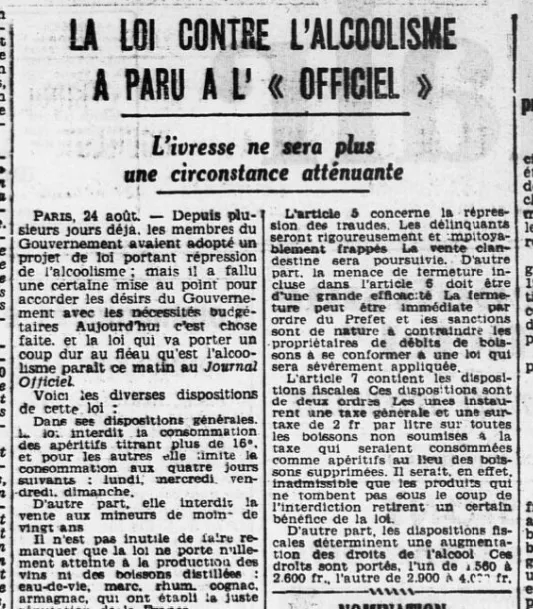
However, the party didn’t last. During World War II, the Vichy regime banned pastis as part of its fight against “alcoholism”, calling it “lazy” and blaming it for the nation’s defeat. During this period, Paul worked in Camargue as a farmer, employing his previous employees to avoid being sent to Germany to join the war effort.
Camels, Pope, and the Tour de France
Even after WW2 ended, it wasn’t until 1951 that the ban on 45% ABV pastis was lifted. Ricard returned, engaging in a fierce rivalry with the newly formed Pernod 51, later renamed Pastis 51. To win this war, Paul Ricard looked beyond France.
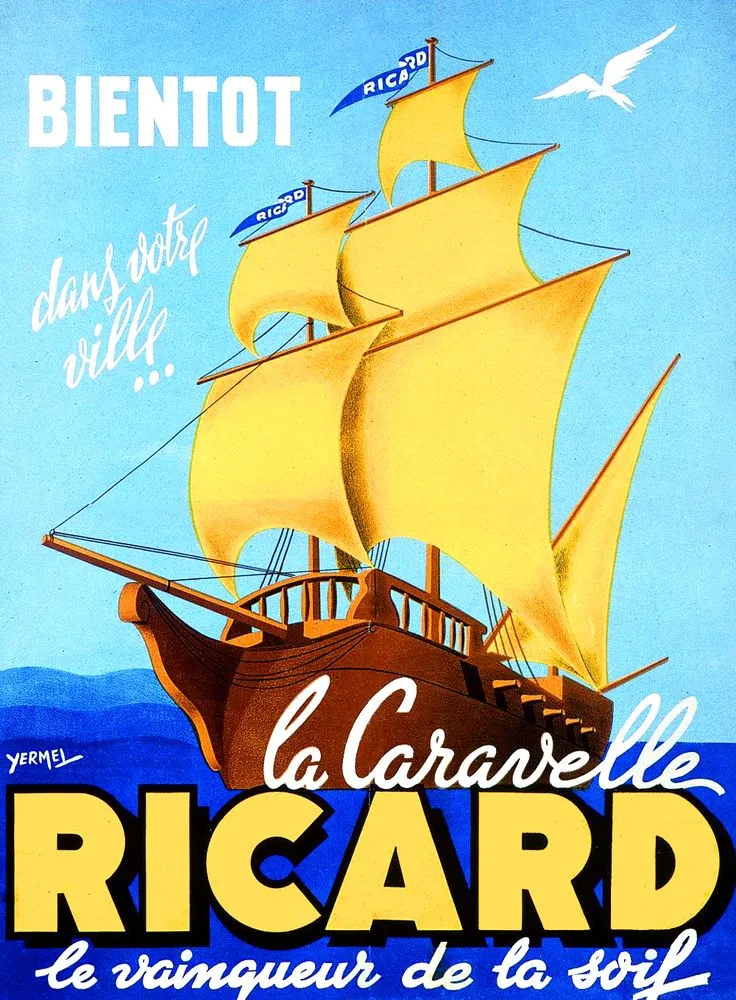
After a trip to the United States, he returned with a revelation that would change French commerce forever: the power of corporate sponsorship. He applied these American lessons with a distinctly Provençal flair. He launched the Ricard Caravan at the Tour de France, turning the race into a rolling yellow festival with free concerts.
His audacity knew no bounds; when the Suez Crisis caused gas shortages in 1956, he famously delivered Ricard to Paris on the backs of camels, calling it the “Caravane de la Soif”. He even took his entire staff to Rome in 1961, where Pope John XXIII reportedly blessed the Pastis! This relentless marketing machine turned a local drink into a global icon, eventually paving the way for the historic merger with Pernod in 1975, becoming the multinational we know today.
Today, the Pastis Ricard is only one of the many spirits and products the brand sells worldwide. Just to give you an idea, the brand Pernod-Ricard had a revenue of 2.34 Billion euros in Q1 2025.
Inside the Bottle: The art of assemblage
Ricard has the Appellation Pastis de Marseille. According to the strict EU regulations for Pastis de Marseille, the spirit must have an anethole content between 1.9 and 2.1g per liter, has an alcohol content of 45% and must include natural extracts of licorice root.
The Ricard Process: Precision over Maceration
-
The Foundation (45°): It begins with neutral alcohol stored in stainless steel tanks. Using softened water, this alcohol is brought down to exactly 45% ABV. This specific degree was chosen by founder Paul Ricard not just for potency, but for chemistry: it is the ideal strength to perfectly dissolve the essential oils and prevent the alcohol from overpowering the palate.
-
The Anethole Injection: Unlike the misconception that raw herbs are just thrown into a vat, Ricard uses essential oils. The key ingredient, anethole, is derived from a blend of star anise (badiane) from China, and fennel (anis vert) from France. This anethole is heated to 38°C to ensure it incorporates perfectly into the alcohol base.
-
The Licorice & The Secret Herbs: Next comes the licorice (réglisse), which Ricard does not want to communicate the exact amount used. Finally, the “mystery ingredient” is added: a secret aromatic cocktail of Provençal herbs.
-
Modern Filtration: There is no aging in barrels. Instead, the focus is on purity. The mixture undergoes a rigorous filtration process using modern cellulose filters (replacing the older earth filters used before the 2000s) to ensure a bright, clean final product before bottling.
The result is not a simple maceration, but a masterclass in consistency, ensuring that the “Petit Jaune” tastes exactly the same in every glass.
What to expect when your pour a glass
If Pernod is a crisp herbal breeze, Ricard is a warm, sunny hug.
When you pour it neat, it has a distinct amber/brown hue: that’s the licorice talking. When you add water, the louche is instantaneous and opaque. The amount of water is up to you: I prefer it slightly stronger, so I use 3 parts water to 1 part Ricard.
The attack is frank and bold. You get a massive hit of anise followed immediately by the sweet, woody persistence of licorice. It coats the mouth. It is less “floral” than Pernod and definitely on the drier side. Pastis de Marseille are usually my favorite precisely for this reason.
Bottle Profile
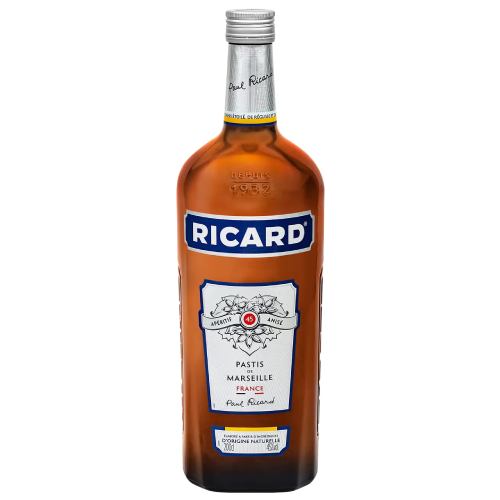
Characteristics
45%
700ml
Pastis de Marseille
France
23.99€ / L
Where to find it?
Ricard is likely the most exported anise spirit on the planet. If there is a French restaurant or a bottle shop with an “International” section near you, Ricard is usually the first bottle on the shelf.
The Standard Bearer
Ricard isn’t just a drink; it’s a cultural institution. It shaped the way the French drink, popularized the Pastis single-handedly, and proved that a boy from Marseille could take on the world. It might not have the absinthe lineage of Pernod, but it has something else entirely: the heart of Provence.
If you are building your Pastis collection, this should be part of your Starters, alongside Pernod and Pastis 51.
References
- https://www.rayon-boissons.com/spiritueux/ce-que-pesent-les-grandes-marques-de-pernod-ricard-dans-le-monde
- https://www.usinenouvelle.com/article/dans-les-coulisses-de-la-preparation-du-celebre-pastis-de-pernod-ricard.N2216846
- https://eur-lex.europa.eu/legal-content/EN/TXT/HTML/?uri=CELEX:32019R0787#anx_II
- https://www.pernod-ricard.com/sites/default/files/2025-07/DP_PR_VF_FINAL_web_ok.pdf
- https://fr.wikipedia.org/wiki/Paul_Ricard
Curious to learn more about the brand? Check out the Pernod-Ricard page for more details.
For more stories and daily news from the world of Pastis, join us on our Instagram!